Padel vs Pickleball: Which Should You Play?

Two racket sports are taking over UK leisure centres, parks and purpose-built venues right now: padel and pickleball. Both are social, beginner-friendly, and far easier to pick up than tennis — but they are genuinely very different experiences. If you've been invited to try one (or both) and aren't sure where to start, this guide will settle it.
At PadelPickleClub we list clubs and coaches for both sports across the UK, so we have no dog in this fight. Here's an honest, practical comparison.

What Are Padel and Pickleball?
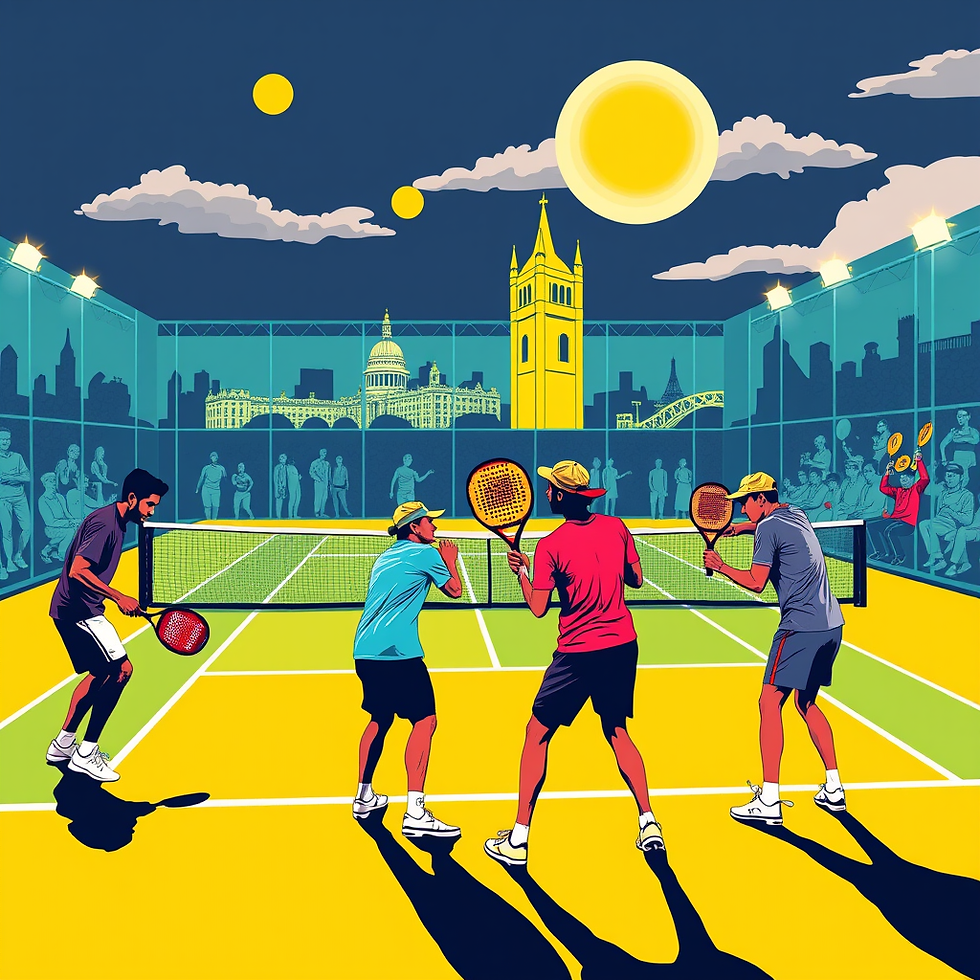
Padel is always played in doubles on a 20m × 10m enclosed court surrounded by glass walls and metal mesh. The walls are live — the ball can rebound off them, creating longer rallies and tactical angles. You use a solid perforated racket (no strings) and a low-pressure tennis-style ball. Scoring follows tennis (15-30-40-game), and the serve is underarm with the ball bouncing once first.
Pickleball is played on a smaller open court (13.4m × 6.1m) — roughly the size of a badminton court. There are no walls. Players use a flat solid paddle and a lightweight plastic ball with holes. You can play singles or doubles. The scoring is a race to 11 points (win by 2), and the most distinctive rule is the "kitchen" — a no-volley zone 2.1m either side of the net where you can't hit the ball out of the air.
In short: padel feels like a cross between tennis and squash. Pickleball feels like miniaturised tennis crossed with ping-pong.
The Key Differences at a Glance
Category | 🟠 Padel | 🔵 Pickleball |
Court size | 20m × 10m (enclosed) | 13.4m × 6.1m (open) |
Walls in play | Yes — central to the game | No |
Players | Always doubles (4) | Singles or doubles |
Equipment | Perforated solid racket + pressurised ball | Flat paddle + plastic holed ball |
Scoring | Tennis scoring (sets & games) | Race to 11 points |
Serve style | Underarm, ball bounces first | Underarm, directly into box |
Special rule | Ball can rebound off walls | "Kitchen" no-volley zone at net |
Intensity | Higher — more court to cover | Lower — accessible for all ages |
Game length | 60–90 mins | 20–30 mins |
UK Courts and Availability in 2025
This is where the two sports diverge most sharply right now.
Padel is much easier to access for a guaranteed game. The UK passed 1,000 dedicated padel courts across 325 venues in 2025, and you can almost certainly find one within 15–20 minutes of most UK towns and cities. Courts are purpose-built and bookable via apps in minutes.
Pickleball has over 400 registered venues, but the majority are multi-use spaces — leisure centres with lines taped on a badminton court for a Tuesday evening session. Dedicated pickleball facilities are still rare, with only around 7 fully dedicated sites in 2025 (with more planned for 2026).
👉 PadelPickleClub lists 3,000+ clubs across both sports. Find a Padel Court or Find a Pickleball Venue near you.
Fitness and Intensity: Which Gives You a Better Workout?
Both sports provide genuine cardio and improve agility, hand-eye coordination and reflexes. But the intensity is noticeably different.
Padel involves more movement per rally. The larger court, faster ball and wall rebounds create more scrambling, lateral sprints and dynamic positioning. A hard padel session is a proper workout — you'll feel it in your legs.
Pickleball is deliberately more accessible. The smaller court reduces running demands significantly, and a lot of the game is played at the net with soft, precise "dink" shots rather than power. This makes it excellent for older players or those returning from injury.
Choose padel for: higher calorie burn, anaerobic bursts, a tennis-style workout with less impact than squash
Choose pickleball for: joint-friendly cardio, daily play without overtraining, proven wellbeing benefits (especially for over-50s)
How Much Does It Cost?
Padel court hire typically runs £10–£20 per person per hour, split four ways. A beginner racket costs £30–£80; balls are around £5 for a tube of three. Some clubs offer racket hire.
Pickleball is cheaper to access. Session fees at community clubs are often £5–£10. A beginner paddle costs £25–£60, and balls last longer. However, private court bookings are harder to find.
Beginner tip: Both sports are easiest to start with a taster session or open day. Most clubs on PadelPickleClub offer free or low-cost introductory sessions.
Who Is Each Sport Best Suited For?
Try padel if you:
Want a guaranteed court booking with easy online booking
Are looking for a proper cardio workout
Have a tennis background and want something fresh
Enjoy the social energy of doubles play
Want access to a growing competitive scene in the UK
Try pickleball if you:
Want the most affordable entry point
Prefer lower impact on your joints
Want to play solo or in a pair without recruiting four people
Are over 50 or returning from injury
Are drawn to the huge and welcoming community feel
The Verdict
Try padel first if you want a guaranteed court booking, a more intense workout, and you're drawn to the social doubles format — especially if you have a tennis background.
Try pickleball first if accessibility and affordability matter more, you want a lower-impact sport, or you'd rather play solo without needing to recruit four people every time.
The honest truth? Try both. The UK is one of the few places in the world where both sports are growing simultaneously, and many players end up enjoying both. They're complementary — padel players often love pickleball on recovery days, and pickleball players frequently graduate to padel when they want more of a challenge.
Frequently Asked Questions
Is padel or pickleball easier to learn? Both are significantly easier than tennis. Pickleball has a slight edge for absolute beginners — the smaller court and simpler scoring mean you can enjoy a rally within minutes. Padel takes a session or two to get comfortable with wall play, but the learning curve is still very gentle.
Can I play if I've never played tennis? Yes to both. No tennis background needed. If anything, players who've never played tennis sometimes adapt faster because they don't have habits to unlearn.
How many padel courts are there in the UK? The UK passed 1,000 padel courts across 325 dedicated venues in 2025, with new courts opening regularly.
Is pickleball popular in the UK? Growing fast — Pickleball England reported 98% club growth and over 10,000 new members recently. But it's still smaller than padel: padel has 400,000+ players who've played at least once; pickleball has around 35,000–41,000 active participants.
Can I play pickleball on a tennis court? Yes — a standard tennis court fits multiple pickleball courts. Many clubs tape out lines on existing surfaces, which is why pickleball is cheaper to set up than padel's glass-walled courts.
What equipment do I need to start? Padel: a racket (£30–£80) — many clubs also offer hire. Pickleball: a paddle (£25–£60) — many community sessions supply equipment free. Both sports work in standard court shoes.
Where can I find a club near me? PadelPickleClub lists 3,000+ clubs and venues for both sports across the UK. Search by location here.


Comments